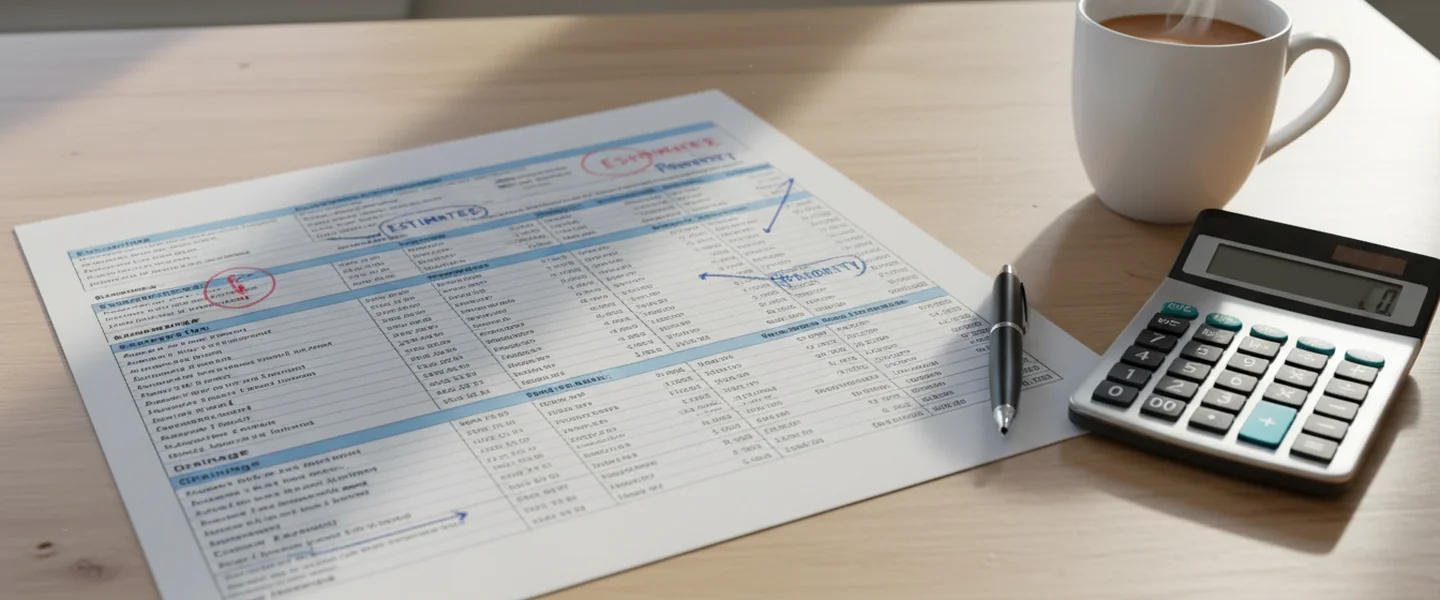
How to Read a Foundation Repair Quote (Line by Line)
Locally based foundation repair specialists serving the Fairfax area and Northern Virginia.
- Licensed & Insured in Virginia
- Locally Owned, Fairfax-Based
- Lifetime Manufacturer Pier Warranty
- Free On-Site Structural Inspections
- Engineered Repair Plans
You’ve gotten a foundation repair quote and now you’re trying to decide whether to accept it. This post walks you through every line item that should be in a quality Fairfax-area foundation repair quote, what each line item means, and what to look for when comparing two or three quotes side by side. We don’t quote on the website — we quote after inspecting — but this guide should help you read whatever quotes are in your hands right now.
The Anatomy of a Good Foundation Repair Quote
A good quote is itemized. A good quote is specific. A good quote uses brand names and model numbers, not generic terms. A good quote spells out the warranty in plain English. Here’s what should be in it, line by line.
1. The Failure Mode Diagnosis
The quote should open with a clear description of what’s wrong and what caused it. “Hydrostatic pressure bowing of the east basement wall, with measurable inward displacement of 3/4 inch at the mid-wall height — driven by seasonal Marumsco clay swelling on the buried side.” Or: “Differential settlement of the southwest corner of the foundation, caused by consolidation of subdivision fill on a 1985 Centreville townhome end unit, with measured floor elevation 1-1/8 inch below the northeast corner.” Vague diagnoses like “foundation issues” are a red flag.
2. The Recommended Repair Method With Rationale
The quote should explain why the proposed repair is the right method for the diagnosis. “Carbon fiber strap stabilization at 4-foot on-center spacing is the right choice because the wall displacement is under 1 inch and the underlying cause has been addressed by the new exterior drainage scope.” A repair method without rationale is a sales script, not an engineering recommendation.
3. Materials Specified by Brand and Model
“Steel push piers, Earth Contact Products PPB-350, 3-1/2 inch diameter, capacity rating 35,000 lbs per pier.” Or: “Carbon fiber straps, [specific brand]. Pumps: Zoeller M-53 primary, Watchdog BWE backup with AGM battery.” Generic terms like “high-quality piers” or “commercial-grade pump” without specification are hiding something. Insist on brands and model numbers.
4. Quantity and Spacing
“Eight (8) push piers at 6-foot on-center along the southwest corner footing.” Or: “Twelve (12) carbon fiber straps at 48-inch on-center along the east basement wall, from floor slab to sill plate.” A quote that doesn’t specify quantity and spacing is incomplete.
5. Engineering Documentation
For piering work, major bowing wall repair, egress windows, or any work that Fairfax County or the City of Fairfax requires engineering for, the quote should specify whether engineering is included and who provides it. “Stamped Professional Engineer letter included, prepared by [PE name and Virginia license number] of [firm], at no additional charge to homeowner.” If engineering is required but not included in the quote, ask why.
6. Permits
The quote should specify whether permits are required and who pulls them. “Fairfax County structural permit pulled and closed by contractor; permit fee included in quoted price.” Some work doesn’t require permits in Fairfax County — crack injection and interior basement waterproofing typically don’t. Piering and egress windows always do.
7. Timeline By Day
“Day 1: Excavation at pier locations (8 piers, exterior of foundation southwest corner). Day 2: Pier installation, ECP push piers driven to bearing strata. Day 3-5: Controlled re-leveling, 1/4 inch per day. Day 6: Backfill and landscape restoration. Day 7: Final walkthrough.” A quote without a day-by-day timeline is incomplete.
8. Payment Schedule
Typical Fairfax-area foundation repair payment schedule is 25-33% on contract signing, 33% on materials delivered and work started, balance on completion. Quotes asking for more than 33% upfront are unusual and should be questioned. Pre-paid jobs go wrong more often than progress-paid jobs.
9. Warranty Terms in Plain English
The quote should specify each warranty component, length, transferability, and exclusions. “25-year transferable workmanship warranty on the carbon fiber installation. 25-year manufacturer materials warranty on the carbon fiber. Transferable to new homeowner with no transfer fee. Exclusions: damage caused by subsequent renovation that disturbs the strap installation; new movement in areas outside the carbon fiber coverage.” A quote that buries warranty exclusions in fine print is a red flag.
10. The Specialist’s Name and Credentials
The quote should identify the specialist who inspected the property and who will lead the install. Sales-and-crew model contractors sometimes obscure this — the “Sales Consultant” name on the quote is not the person who will be on site. Ask explicitly: who will be on site running the install?
Red Flags to Watch For in a Foundation Repair Quote
Vague language. “Foundation repair package — Tier 2” without specifying materials, quantity, or scope. This is the classic franchise sales pattern.
“Starting at” pricing. Any number that ends with a “starting at” headline figure is bait. The real price always comes out higher.
Today-only pricing. A discount that disappears at midnight is a pressure tactic. Real specialists give you 30 days to compare options.
Massive deposit demand. More than 33% upfront is unusual. More than 50% upfront is a red flag.
Non-transferable warranty. A non-transferable warranty signals the contractor expects to not honor it. Walk away.
No engineering on a piering job. Major piering without a stamped PE letter is either inexperienced or cutting corners.
Subcontracted crew with no name. A contractor who won’t tell you who will be on site is hiding something.
How to Compare Two or Three Quotes
Make a spreadsheet. Columns: Failure Mode Diagnosis, Repair Method, Materials (brand and model), Quantity, Engineering Included, Permits Included, Timeline (days), Warranty Length and Transferability, Total Price. Fill in each row from each quote.
You will almost always find that one quote is missing categories that the others include. Sometimes the missing category is a real scope gap (one contractor doesn’t address the drainage that the others do). Sometimes the category is included but rolled into a vague line item (the missing engineering is “included in our service fee”). Either way, the comparison exercise surfaces the differences.
Then call each contractor and ask about the differences. A good contractor will explain their rationale and help you understand the trade-offs. A bad contractor will get defensive or try to undercut the other quotes without engaging on the merits. The quality of the answers tells you which contractor you should hire.
When the Cheapest Quote Is Actually the Worst Quote
In the Fairfax-area foundation repair market, the cheapest quote is almost always missing scope. The common omissions are: drainage work on a piering job (you fix the structural symptom but the underlying clay continues to load the wall), engineering on a job that requires it (you save the PE fee but lose the resale documentation and the permit clearance), warranty transferability (you save on the upfront but lose the resale benefit in Fairfax County’s appraisal-sensitive market), and materials downgrades (off-brand piers, undersized pumps, non-ICC-ES listed components).
Add up the scope gaps and you usually find that the cheap quote is genuinely cheaper because it does less work, not because the contractor is more efficient. The right comparison is scope-for-scope, not price-for-price.
When the Most Expensive Quote Is Actually the Worst Quote
In the Fairfax-area market, the most expensive quote is often a national franchise selling a “platinum tier” package with 30-50% margin overhead. The materials are the same as a local specialist would install. The warranty is sometimes worse (non-transferable, with hidden exclusions). The engineering is the same. The difference is the advertising budget, the sales overhead, and the corporate margin.
That doesn’t make every expensive quote bad — sometimes the scope is genuinely larger or the engineering more involved. But “expensive” doesn’t automatically equal “better.” Spec parity matters more than price parity.
Fairfax-Specific Considerations
Several factors specific to Northern Virginia affect what should be in your quote. If your property is on expansive Marumsco clay (much of McLean, Vienna, Oakton), the quote should reflect helical pier design with the helix below the active zone, and a stamped PE letter that addresses seasonal clay movement specifically. If your home is in a cut-and-fill subdivision (Burke, Centreville, parts of Chantilly), the quote should account for differential settlement between fill and cut sides. If your basement has documented water entry during summer thunderstorms, the quote should address the drainage and waterproofing scope, not just the structural symptoms. The Fairfax County appraisal market values documented foundation work, so a thin or non-itemized quote will hurt resale even if the work itself is performed correctly.
Questions to Ask About Any Quote
- What is the underlying cause of the foundation problem, in plain English?
- Why is the proposed repair method the right one for that cause?
- What brand and model of materials are you installing, and are they ICC-ES listed?
- Is engineering documentation required, and is it included in the quoted price?
- Is the warranty transferable, and is there a transfer fee?
- Who specifically will be on site running the install — by name?
What to Do If a Quote Doesn’t Have the Details You Need
Call the contractor and ask for them. A good contractor will provide the details readily — material brands, engineering specifications, permit handling, warranty exclusions. A bad contractor will deflect, get defensive, or refuse to provide the detail in writing. The willingness to be specific is a strong predictor of the quality of the work.
Common Misconceptions About Foundation Repair Quotes
“All quotes are basically the same.”
They’re not. Scope, materials, engineering, warranty, and personnel all vary, and the variance can be 50-100% in total project cost for the same underlying problem. Compare carefully.
“The contractor will fill in the details after I sign.”
No. The details should be in the quote before you sign. Verbal commitments don’t survive change orders during install. Get it in writing first.
“I should just trust the most-reviewed company.”
Review count is one signal, but the quote itself tells you more about how the contractor operates than review count does. A specific, detailed quote from a smaller specialist is usually a safer bet than a vague quote from a heavily-reviewed national franchise.
“The free inspection means the quote is biased toward selling work.”
Sometimes, with sales-first contractors. Less so with specialist-first contractors. The right test is whether the specialist is willing to tell you “no work needed” when that’s the honest answer. Ask if you can have a copy of the inspection report regardless of whether you hire the contractor.
Bottom Line
A quality foundation repair quote in the Fairfax area is itemized, specific, branded, engineered, transferable, and personalized to the actual conditions of your home. If the quote you’re holding doesn’t have those qualities, request the details or get a second quote that does. Call (571) 740-0342 for a free on-site inspection and a written quote that includes everything in this checklist — and for a free second-opinion review of any quote you’ve already received.
Service Areas We Cover
We serve Fairfax and the entire Northern Virginia region. Click your suburb for local details and our typical findings in your housing stock:
Free Foundation Inspection in Fairfax
Same-week appointments. No high-pressure sales. Serving Fairfax and surrounding areas including Vienna, Oakton, Burke, Annandale, Centreville, Chantilly, McLean, Springfield.