Push Piers vs Helical Piers: Which Is Right for Fairfax Soil?
Locally based foundation repair specialists serving the Fairfax area and Northern Virginia.
- Licensed & Insured in Virginia
- Locally Owned, Fairfax-Based
- Lifetime Manufacturer Pier Warranty
- Free On-Site Structural Inspections
- Engineered Repair Plans
If a foundation specialist has told you that your Fairfax-area home needs piers, the next question is almost always “what kind?” The two options for residential foundation repair are steel push piers and helical piers, and the right choice depends on your specific soil profile, the cause of settlement, the structural load involved, and whether the work is in a cut-and-fill subdivision or on native expansive clay. This post explains the difference and what’s right for the soils we see across Northern Virginia.
What Steel Push Piers Are
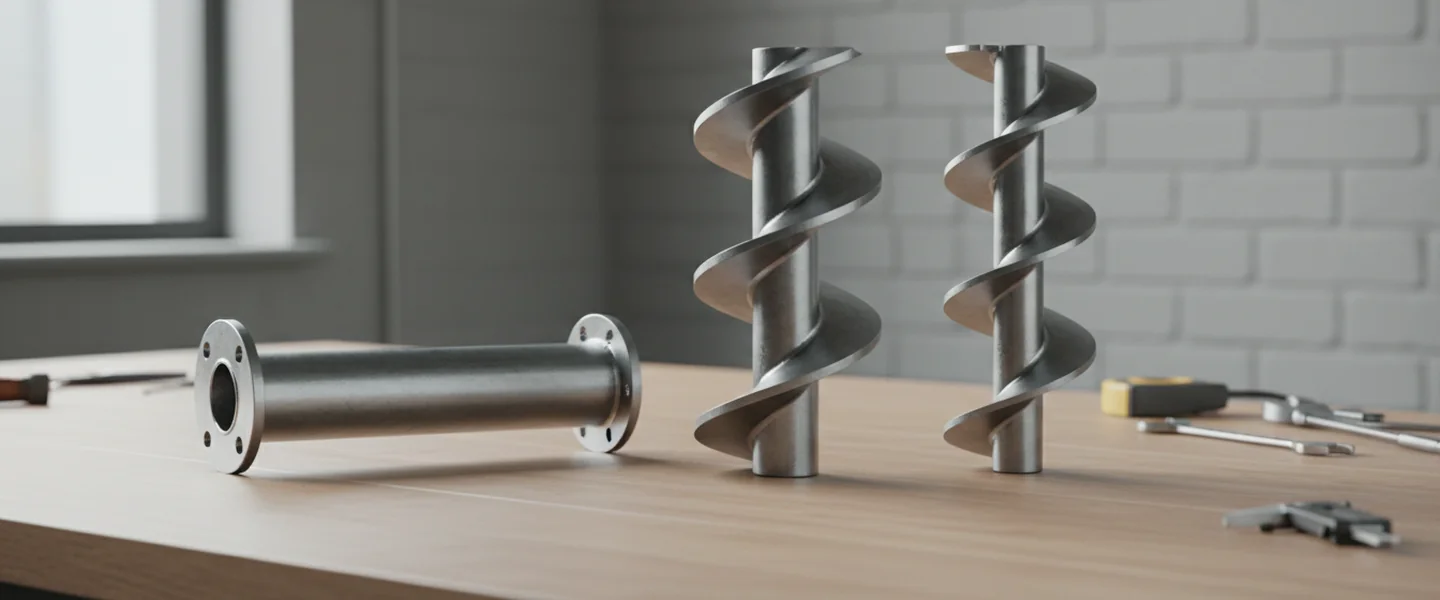
Steel push piers are sections of high-strength steel pipe (typically 2-7/8 to 3-1/2 inch diameter) driven hydraulically into the soil one section at a time. The piers use the weight of the home as the reaction force during driving — each pier is advanced until it reaches load-bearing strata, at which point the hydraulic pressure curve confirms competent soil. A custom bracket transfers the foundation load to the top of the pier, and the pier carries that load past the failing soil to the competent strata below.
Push piers are most effective in soils where competent bearing strata exists at a reasonable depth — typically weathered Piedmont saprolite, decomposing bedrock, or competent native clay below the active zone — and where the home has enough weight to provide reaction force during driving. They are well-suited to multi-story Fairfax-area homes (1960s-1980s colonials, McLean custom homes, two-story Vienna split-levels with brick veneer) where the building weight is sufficient for driving but the original footing is undersized or the underlying soil has consolidated.
What Helical Piers Are
Helical piers are steel shafts with welded helical plates (like screws) that are rotated into the soil with a hydraulic torque head. Depth-to-capacity is verified by the torque required to advance the pier — torque correlates directly to load capacity in well-characterized soils. Helical piers do not require the home weight as reaction force during installation, so they can be installed on lighter structures (additions, decks, garages, single-story ramblers) where push piers would not work as well.
Helical piers are most effective in expansive-clay soils where the upper soil has high seasonal shrink-swell activity — which describes much of Fairfax County’s residential housing stock. The helix engages competent soil at a defined depth below the active zone, and the upper soil can continue to swell and shrink seasonally without transferring load to the pier. They are the right choice for Fairfax-area homes on Marumsco clay, for cut-and-fill subdivision homes where fill is still consolidating, and for lighter single-story ramblers.
The Key Differences
Driving method. Push piers are hydraulically rammed; helical piers are torqued in like a screw.
Reaction force. Push piers require the building weight for installation; helical piers do not.
Depth confirmation. Push piers use hydraulic pressure; helical piers use torque.
Soil tolerance. Push piers prefer dense, deep bearing soils; helical piers prefer well-characterized competent soils at a defined depth and tolerate seasonal clay movement better.
Active soil movement. Push piers are more vulnerable to lateral loading from moving soil; helical piers tolerate seasonal clay shrink-swell better because the helix is at a defined depth below the active zone.
Cost. Push piers are typically slightly less expensive per pier; helical piers cost more per pier but sometimes require fewer piers for the same load.
Which Is Right for Fairfax Soil?
Northern Virginia’s soil profile is dominated by Piedmont expansive clays — Marumsco clay, Glenelg silt loam, and related red-clay-rich substrates — over weathered saprolite that transitions to competent bedrock at depths typically 10-40 feet below grade. The active zone of seasonal moisture change in these clays is typically 6-10 feet deep. Below the active zone, the clay stabilizes; below the saprolite, bedrock provides high-capacity bearing.
For Fairfax-area homes on expansive clay where seasonal shrink-swell is the dominant cause of foundation movement (much of McLean, Vienna, Oakton, parts of Springfield), helical piers are typically the right answer. The helix is set below the active zone, decoupling the foundation from seasonal soil movement. We default to helical piers for any home where the inspection visit measures meaningful seasonal floor-elevation variation or seasonal door-operation differences.
For Fairfax-area homes on cut-and-fill subdivision grading (Burke, Centreville, Chantilly Westfields corridor), the choice depends on fill depth and how much consolidation remains. Shallow fill (5-15 feet) is well-suited to helical piers — the torque-to-capacity verification is reliable in fill soils. Deeper fill (20+ feet) sometimes requires push piers because helical piers may not be available in sections long enough to reach competent native soil.
For Fairfax-area homes on heavier multi-story structures where the goal is to address inadequate original footing depth or footing frost-heave damage (older Annandale colonials, two-story McLean customs, Vienna multi-level splits), steel push piers driven to weathered saprolite or bedrock are often the most economical choice. The building weight provides the reaction force, the depth verification is straightforward, and the lifetime warranty on ICC-ES listed push piers is a solid long-term outcome.
What the Engineering Looks Like
Any pier scope on a Fairfax-area home should be accompanied by a stamped Professional Engineer letter that specifies pier type, capacity rating, depth requirements, spacing, and load calculations. For expansive-clay work, the engineering also addresses the depth-below-active-zone requirement and confirms the pier design decouples the foundation from seasonal soil movement. The PE letter is not optional on these jobs — most Fairfax County and City of Fairfax building departments require it for permit issuance.
For interior settlement on smaller-scope work, engineering may be required by the local building department or may be left to the contractor’s discretion. We provide engineering documentation on every pier job regardless of whether the permit requires it — the engineered scope produces better outcomes and the documentation matters at resale in the Fairfax County market.
What Both Pier Types Have in Common
Both push and helical piers, properly installed, produce permanent foundation stabilization that does not require future maintenance. Both transfer the building load past the failing soil to load-bearing strata. Both allow controlled re-leveling of the foundation after installation. Both carry lifetime manufacturer warranties on the pier material and 25-year transferable workmanship warranties from us. Both produce engineering documentation acceptable to home inspectors, insurance adjusters, and real-estate buyers at resale.
What to Ask the Contractor
- What pier type are you proposing — push or helical — and why is that the right choice for my soil?
- Is my home on expansive Marumsco clay, cut-and-fill subdivision grading, or native sandier soil — and how does that affect the pier choice?
- What’s the engineered capacity rating per pier and how many piers do I need?
- How deep do you expect to drive to reach competent strata?
- Is the work permitted with Fairfax County or the City of Fairfax, and is the engineering PE letter included in your quote?
- What’s the warranty on the piers, the installation, and the re-leveling work?
Fairfax-Specific Considerations
Fairfax County’s Soil Survey publishes detailed soil maps that document expansive-clay distribution across the county. Most pre-1980 subdivisions in the inner Fairfax County areas (Annandale, Vienna, Oakton, parts of Springfield) sit on Marumsco clay or related expansive soils. Most newer subdivisions in the outer county areas (Chantilly, parts of Burke) sit on engineered fill over a mix of clay and saprolite. The right pier choice differs between these two patterns, and a contractor who can’t articulate the difference for your specific neighborhood is a contractor who doesn’t know the local soils.
The Northern Virginia summer thunderstorm season is also a consideration for pier work. The exterior excavation required at each pier location is best done during drier weeks. We typically prefer to schedule pier work between October and March when soils are drier and excavation is faster, though we do clay-driven emergency work year-round when the timing is forced by accelerating settlement or seasonal wall movement.
Common Misconceptions About Pier Choice
“Helical piers are always better than push piers.”
Not always. Push piers are the right choice on heavier structures with competent deep bearing strata. Helical piers are the right choice for expansive-clay seasonal movement, for lighter structures, and where verification by torque is more reliable than verification by pressure. Both are valid tools; the soil and the structure determine the choice.
“More piers is always safer.”
Not necessarily. Properly engineered pier spacing accounts for the load, the soil bearing capacity, and the structural redundancy. Adding more piers than engineering specifies doesn’t make the install safer — it just adds cost. The engineered count is the right count.
“Cheaper pier brands are just as good.”
Not quite. ICC-ES listed piers from established manufacturers (Earth Contact Products, IDEAL Foundation Systems, Magnum, etc.) carry lifetime warranties and have third-party-verified capacity ratings. Generic piers from unverified sources sometimes work, but the warranty and the engineering documentation are weaker, which matters at resale.
“DIY pier kits work fine.”
You can buy materials for direct installation. You cannot replicate the engineering, the hydraulic driving equipment, the torque-monitoring instrumentation, or the warranty coverage. DIY pier work also fails to satisfy permit requirements on most Fairfax County projects, which makes future resale difficult.
Bottom Line
For most Fairfax-area homes on expansive clay where seasonal shrink-swell drives the foundation movement, helical piers are the right answer because they decouple the foundation from active-zone soil movement. For heavier multi-story homes on deeper competent strata where the issue is inadequate original footing, steel push piers are often the better choice. The right contractor explains the choice in writing with engineering documentation. Call (571) 740-0342 for a free on-site inspection that includes soil-profile review, engineering analysis, and a written recommendation with the rationale spelled out.
Service Areas We Cover
We serve Fairfax and the entire Northern Virginia region. Click your suburb for local details and our typical findings in your housing stock:
Free Foundation Inspection in Fairfax
Same-week appointments. No high-pressure sales. Serving Fairfax and surrounding areas including Vienna, Oakton, Burke, Annandale, Centreville, Chantilly, McLean, Springfield.